
NFL
🔥 Kid Rock Sparks National Outrage After Canceling All New York City Shows: “I’m Done Singing for Commies and Sellouts” 🔥 In a stunning move that’s sending shockwaves through the entertainment world, Kid Rock has officially canceled every single tour date scheduled in New York City for next year — and his explanation is as explosive as his music. Taking to social media, the rock icon declared, “Sorry, NYC, but I don’t sing for commies,” igniting a political firestorm overnight. Fans are divided, critics are fuming, and supporters are cheering what they call a “patriotic stand” against what he describes as “the cultural rot of woke politics.” Whether you see it as rebellion or recklessness, one thing’s for sure — Kid Rock just turned his tour into the year’s most controversial act. What really pushed him to draw the line at New York? The answer might surprise you. Details in the comments 👇👇👇

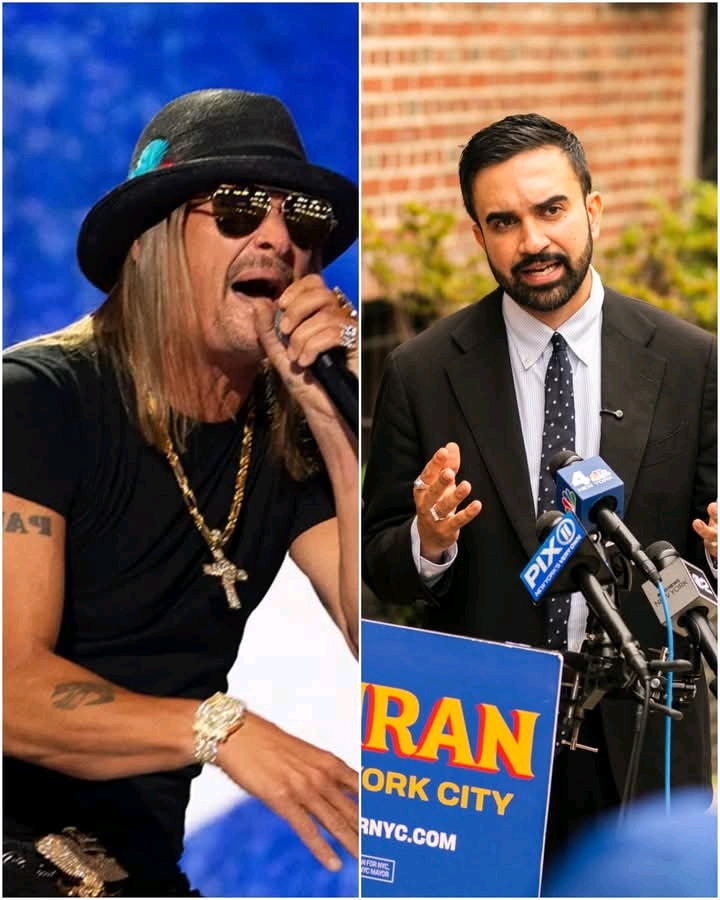
SORRY, NYC — I DON’T SING FOR COMMIES”: Inside the Outrage, the Rumor, and the Cultural Explosion Around Kid Rock’s Alleged Boycott
By Day 2, the rumor had mutated into something almost cinematic. Memes portrayed Kid Rock standing onstage with an American flag guitar, shouting slogans about “freedom.” Others edited fake news tickers on CNN screens: “Kid Rock Refuses to Perform in Communist NYC.”
Talk-radio hosts debated whether the move was “courageous patriotism” or “embarrassing performance art.” Conservative pundits hailed it as a “stand against woke tyranny.” Liberal commentators dismissed it as “another manufactured controversy to rile up culture wars.”
But regardless of where people stood politically, they were talking — constantly.
For Kid Rock, the rumor had already achieved something priceless: it put him back in the center of America’s loudest argument.
Music Meets Politics: A Dangerous Love Affair
The idea of musicians taking political stances isn’t new. From Bob Dylan’s protest songs to Rage Against the Machine’s activism, artists have long fused music and message.
But in today’s polarized climate, even the illusion of a stance can define careers.
Kid Rock occupies a rare space — part entertainer, part political lightning rod. His fanbase, largely working-class and proudly patriotic, sees him as a man who “tells it like it is.” To them, “I don’t sing for commies” wasn’t offensive; it was refreshing. It was a slogan, a battle cry, a badge of authenticity in a world they feel increasingly alienated by.
For others, it was proof that Rock had crossed from rebel to reactionary.
“He used to sing about freedom,” one fan wrote on Reddit, “but now he’s just angry at the wrong people.”
The Anatomy of a Modern Myth
Let’s break down how the story traveled — from satire to viral certainty — in five easy steps:
The Satirical Spark:
A humor page posts a made-up quote, exaggerating Kid Rock’s anti-woke persona.
Selective Outrage:
Partisan accounts amplify it, removing context and implying legitimacy.
Algorithmic Boost:
Engagement explodes; social media prioritizes posts that spark emotional reactions — especially anger.
Echo Chamber Effect:
Online communities begin citing one another as “sources,” creating the illusion of credibility.
Mainstream Pickup:
Blogs hungry for clicks repost the rumor, further legitimizing it. By the time fact-checkers intervene, it’s too late — emotion has already replaced verification.
This is how modern misinformation thrives: truth doesn’t spread nearly as fast as outrage.
New York’s Response
The reaction from New Yorkers was predictably sharp — equal parts humor, mockery, and disbelief.
“Guess we’ll survive,” one X user wrote. “We’ve got Springsteen, Taylor Swift, and Broadway.”
Another joked: “Finally, something good came out of 2025 — no Kid Rock shows.”
Yet not everyone laughed. Some older fans expressed sadness that the rumor seemed believable at all.
“It’s not even true,” one fan said outside Madison Square Garden, “but it feels like it could be, and that’s what scares me. The line between satire and real life doesn’t exist anymore.”
The Echo Chamber Economy
Behind the outrage lies a bigger truth: controversy sells.
Outrage is the internet’s most valuable currency. Every angry share, every indignant comment, every debate fuels the algorithm that drives ad revenue. And Kid Rock’s brand, intentionally or not, thrives in that exact ecosystem.
Even false controversies can boost visibility, Spotify streams, and merch sales. Marketing analysts estimate that viral political scandals — real or fabricated — can spike online engagement by up to 300%. Whether or not Kid Rock started the rumor, he benefited from it.
In a world where attention equals power, truth is optional.
The Artist Who Became a Meme
At some point, Kid Rock the man became inseparable from Kid Rock the meme.
His image — the beer, the flag, the truck, the middle finger — is now shorthand for a certain brand of American defiance.
Every viral story, whether it’s him shooting Bud Light cans or allegedly canceling “commie” concerts, reinforces that brand identity.
To his critics, it’s cartoonish. To his fans, it’s heroic.
But to the entertainment industry, it’s genius — because few artists can dominate cultural conversation without even releasing new music.
The Backlash That Wasn’t
By the third week of the rumor, major outlets like Reuters and USA Today had debunked the story entirely. Still, not everyone accepted the correction.
In comment sections, some users insisted the “mainstream media” was lying to protect liberal elites. Others argued that even if Kid Rock hadn’t said it, “he probably should have.”
In other words, the truth no longer mattered. The myth had replaced the man.
This is the new reality of the internet age: denial, belief, and confirmation bias co-exist like three chords in the same angry song.
Art or Antagonism?
The controversy reignited a long-standing debate in entertainment:
Should musicians remain neutral, or do they have a duty to express beliefs — however divisive — through their art?
Kid Rock’s defenders point to his history of authenticity. “He’s always spoken his mind,” one fan told Rolling Stone. “He doesn’t care what people think.”
But his critics see it differently. “There’s a difference between rebellion and resentment,” a music journalist noted. “He’s turned his defiance into hostility.”
And yet, paradoxically, both sides need each other.
Without outrage, rebellion has no audience.
The Broader Cultural Battlefield
The Kid Rock rumor didn’t just ignite conversations about him — it exposed the fragility of truth in modern America.
It showed how tribalism, technology, and entertainment collide to create self-sustaining narratives where belief outweighs fact. It’s not just about music anymore; it’s about identity.
In that sense, Kid Rock is less a musician than a mirror — reflecting whatever people project onto him.
To some, he’s a working-class hero standing against cultural conformity.
To others, he’s a symbol of stubborn ignorance dressed in leather.
And to the media? He’s a headline generator, guaranteed to drive traffic.
The Power of the Quote That Never Was
The phrase “I don’t sing for commies” became a cultural artifact — a soundbite that traveled the internet faster than any of his actual lyrics.
It appeared on t-shirts, memes, even protest signs at rallies that had nothing to do with him. The quote had escaped its origin, evolving into a statement about national division.
That’s the bizarre irony: a fake quote from a fake story revealed real fractures in American life.
Meanwhile, in Detroit…
Back in Detroit, Kid Rock remained silent. No denials, no clarifications, no angry rants.
To some observers, that silence was strategic. By refusing to address it, he let the rumor feed itself — allowing both sides to argue endlessly while keeping his name alive.
After all, in a digital world where controversy equals currency, silence can be the most powerful marketing strategy of all.
The Fan Divide
Weeks after the story went viral, fans were still debating online.
“Even if it’s fake, it’s funny because it sounds true,” one wrote.
Another countered, “That’s the problem — we believe too easily. We’ve become addicted to outrage.”
It’s a generational shift. Older fans remember when musicians courted controversy for art. Younger audiences see controversy as the art itself.
Kid Rock, willingly or not, became the prototype of that new paradigm.
From Outlaw to Algorithm
Every generation gets the rebel it deserves.
In the 1960s, it was Bob Dylan challenging war.
In the 1990s, Kurt Cobain screaming against consumerism.
In the 2020s, it’s Kid Rock — a digital-age cowboy fighting a culture war online, one meme at a time.
But here’s the catch: rebellion used to mean standing against the machine. Now it often means feeding it.
The algorithm doesn’t care about truth or ideology; it only cares about engagement. And few artists understand that better than Kid Rock.
A Rumor That Says More About Us Than Him
In the end, whether Kid Rock ever actually said “I don’t sing for commies” matters less than why so many believed he did.
Because the story wasn’t about him — it was about us.
About our hunger for outrage, our exhaustion with nuance, and our willingness to trade truth for entertainment.
The rumor became a mirror reflecting a society that no longer distinguishes between satire and sincerity.
The Final Encore
Weeks later, a grainy TikTok surfaced of Kid Rock performing in Nashville. Between songs, he paused, smirked, and said:
“I heard I canceled New York City. Damn — news to me.”
The crowd roared. He grinned, strummed his guitar, and added,
“Don’t believe everything you read, folks — unless it’s about me being awesome.”
It was the perfect ending — half-denial, half-provocation, fully Kid Rock.
Epilogue: The Myth Outlives the Music
Long after the rumor dies down, the legend will linger.
“SORRY, NYC — I DON’T SING FOR COMMIES” will remain one of those internet stories that refuses to fade — retold at bars, on podcasts, and in future think-pieces about “the death of truth.”
And in some strange, poetic way, that’s fitting. Because Kid Rock has always thrived on the line between authenticity and absurdity.
He’s the embodiment of America’s favorite contradiction: a rebel who depends on the system he mocks, a millionaire populist, a showman who turns outrage into art.
Maybe he never canceled those shows. Maybe he never said those words.
But in an era where perception is everything — maybe he didn’t have to.
BREAKING….Seven charges. Obstruction. Abuse of war powers. Bribery. Another resolution accusing threats and intimidation. 140 lawmakers just took a decisive procedural step forward. It’s not final impeachment — not yet. But as protests grow outside and pressure mounts inside, Congress is approaching a breaking point… 🚨 SEE MORE 👇👇

He tried to block it. Delay it. Seal it. But the judge rejected every argument for secrecy and ordered the evidence released immediately. Private meetings. Internal communications. January 6 connections. As the ruling echoed through the courtroom, one reaction changed everything — 🚨 FULL STORY 👇 👇
“He’s Losing His Mind”: Here’s How Trump Responded To The Supreme Court Ruling Against Him…. FULL STORY 👇 👇 😄
“YOU DON’T BELONG!” — The Moment That SHOOK Congress to Its Core! 💥⚖️ 📺😱 What started as a simple committee hearing turned into a $100 MILLION legal b0mbshell — and left Caroline Leavitt visibly rattled on live TV! Jasmine Crockett didn’t raise her voice — she raised the stakes. With just one sentence and a folder of receipts, she flipped the narrative and made history in 90 seconds flat. 🚨💬 Accusations of fraud. Leaked documents. A courtroom showdown that could rewrite the rules of political warfare. Who belongs in power — and who’s about to lose it all? DETAILS BELOW 👇👇

JUST IN…Ivanka Trump reportedly faces 11 to 19 years. A cooperation deal was on the table. Melania said no. ❗ Prosecutors say Trump’s reaction was immediate — explosive calls, urgent messages, a post that vanished. Trial set for June 9, 2026. If this is only the beginning… what will unfold in open court? 👀 READ FULL STORY 👇 👇
BREAKING….Why has Donald Trump issued Keir Starmer a warning about the Chagos Islands? FULL DETAILS 👇 👇 😁

BREAKING…Momentum builds in Washington as impeachment efforts gain traction. Hearings could follow. Public debate intensifies. Pressure mounts. Removal requires two-thirds in the Senate — But history shows these processes don’t stay small for long. 👀 FULL STORY 👇 👇 😀
JUST IN….Trump, 79, Delivers Deranged Threat to Netflix…FULL STORY 👇 👇 👇

🚨 SH0CKWAVE IN WASHINGTON! 🔥 She stood up quietly… then dropped a political NUCLEAR B0MB. 💣 Rep. Jasmine Crockett just exposed what no one dared to touch — Melania T.r.u.m.p’s secret financial ties to foreign powers… and the reaction? Instant chaos. Within minutes, Donald T.r.u.m.p’s meltdown was caught on camera, screaming, red-faced, in front of stunn3d supporters. Now the internet is on fire. 🔥 The White House is silent. 🏛️ And America is asking: What ELSE has been hidden from us? 👉 Buckle up — this isn’t just another headline. It’s the scandal that could shake the foundation of political power in the U.S. Details in comment 👇👇👇
BREAKING….JASMINE CROCKETT JUST ENDED T.R.U.M.P WITH ONE SENTENCE ON THE CAPITOL STEPS – 34 SECONDS OF DEAD AIR THAT ECHOED LIKE A G.U.N.S.H.O.T No podium. No notes. Jasmine Crockett walks straight to the edge of the marble, grabs a single live mic from a stunned reporter, and looks dead into every camera on Earth. Voice low, lethal, no shout needed: “D0nald T.r.u.m.p isn’t a president. He’s a national emerg.e.ncy wearing a red tie, and every day we let him breathe in that office is another day we betray the country we swore to defend.” Thirty-four seconds of total silence.
JUST IN…Newly Released Epstein Files Reveal Email Exchange Between Melania Trump and Ghislaine Maxwell…READ THE SHOCKING DETAILS👇👇
