
NFL
“COCO GAUFF IS READY FOR THE TURIN CHALLENGE” — After overcoming injuries and rediscovering her best form, Coco Gauff declares that the time has come to write a new chapter in tennis history. With her eyes set on the 2025 WTA Finals trophy, the American champion is ready to show the world that the crown of women’s tennis still belongs to her. #tennis #CocoGauff #fblifestyle

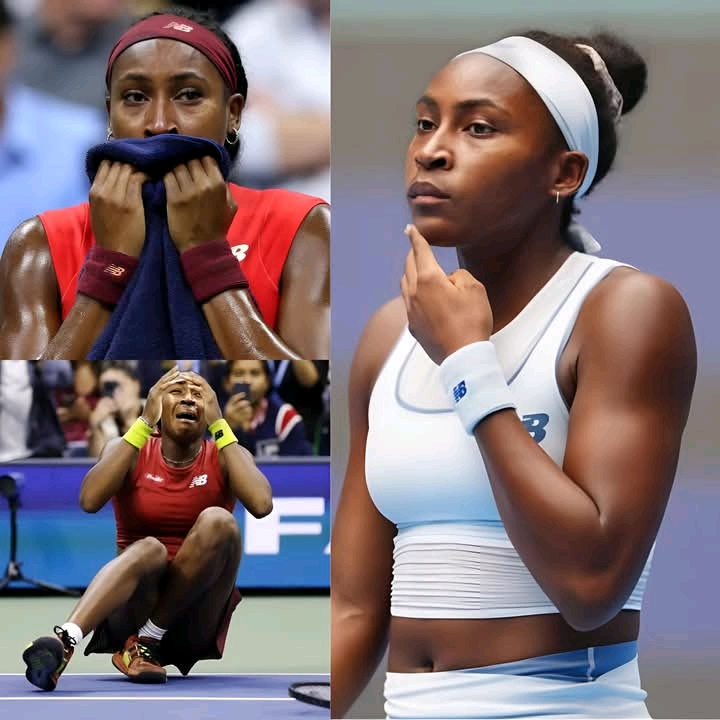
COCO GAUFF IS READY FOR THE TURIN CHALLENGE” — After overcoming injuries and rediscovering her best form, Coco Gauff declares that the time has come to write a new chapter in tennis history. With her eyes set on the 2025 WTA Finals trophy, the American champion is ready to show the world that the crown of women’s tennis still belongs to her.
A Return Written in Fire
There are comebacks — and then there is Coco Gauff.
When she walked into Turin, under the soft winter light and the electric hum of the WTA Finals, she looked nothing like the teenage prodigy the world once labeled her. Gone was the wide-eyed wonder. What remained was something stronger — calmer, sharper, almost regal.
She had been broken, doubted, questioned, and quietly rebuilt. The girl who once carried the weight of expectations had learned to let go of them. And in their place, she carried only conviction.
“It’s time to write a new chapter,” she said softly, moments before her first match. “And this time, I’m writing it for me.”
The crowd didn’t quite grasp the magnitude of those words — but the tennis world did. Because beneath that calm statement was a story of survival, rebirth, and the reclaiming of identity in a sport that rarely allows women, especially young Black women, the space to grow in peace
From Prodigy to Pressure
Coco Gauff burst onto the global stage at fifteen, taking down Venus Williams at Wimbledon and instantly being hailed as the “future of tennis.” But fame, as always, is a double-edged sword. With every headline came expectations she never asked for. With every victory came pressure disguised as praise.
By the time she turned twenty, Gauff had already lived a full career’s worth of scrutiny — every loss dissected, every gesture magnified, every silence filled with interpretation. She was no longer just Coco; she was a projection of what people wanted her to be — a savior, a symbol, a storyline.
And then, like all heroes in quiet decline, she hit the wall.
The injuries began to pile up — minor at first, then persistent. Her confidence faltered. The spark dimmed. After a painful exit from Roland Garros, Gauff stood in front of reporters, tears welling in her eyes.
“Sometimes,” she said, “I just feel like I’m not enough.”
Those six words broke hearts — but they also marked a turning point. Because Coco Gauff doesn’t crumble. She reconstructs.
Coco Gauff has message for Jasmine Paolini immediately after beating her at the WTA Finals
The Season of Silence
Instead of running from failure, she stepped into it. She took months off to heal — not just her body, but her mind. She worked with sports psychologists, spent time journaling, rediscovered the joy of hitting a tennis ball without expectation.
BREAKING….Seven charges. Obstruction. Abuse of war powers. Bribery. Another resolution accusing threats and intimidation. 140 lawmakers just took a decisive procedural step forward. It’s not final impeachment — not yet. But as protests grow outside and pressure mounts inside, Congress is approaching a breaking point… 🚨 SEE MORE 👇👇

He tried to block it. Delay it. Seal it. But the judge rejected every argument for secrecy and ordered the evidence released immediately. Private meetings. Internal communications. January 6 connections. As the ruling echoed through the courtroom, one reaction changed everything — 🚨 FULL STORY 👇 👇
“He’s Losing His Mind”: Here’s How Trump Responded To The Supreme Court Ruling Against Him…. FULL STORY 👇 👇 😄
“YOU DON’T BELONG!” — The Moment That SHOOK Congress to Its Core! 💥⚖️ 📺😱 What started as a simple committee hearing turned into a $100 MILLION legal b0mbshell — and left Caroline Leavitt visibly rattled on live TV! Jasmine Crockett didn’t raise her voice — she raised the stakes. With just one sentence and a folder of receipts, she flipped the narrative and made history in 90 seconds flat. 🚨💬 Accusations of fraud. Leaked documents. A courtroom showdown that could rewrite the rules of political warfare. Who belongs in power — and who’s about to lose it all? DETAILS BELOW 👇👇

JUST IN…Ivanka Trump reportedly faces 11 to 19 years. A cooperation deal was on the table. Melania said no. ❗ Prosecutors say Trump’s reaction was immediate — explosive calls, urgent messages, a post that vanished. Trial set for June 9, 2026. If this is only the beginning… what will unfold in open court? 👀 READ FULL STORY 👇 👇
BREAKING….Why has Donald Trump issued Keir Starmer a warning about the Chagos Islands? FULL DETAILS 👇 👇 😁

BREAKING…Momentum builds in Washington as impeachment efforts gain traction. Hearings could follow. Public debate intensifies. Pressure mounts. Removal requires two-thirds in the Senate — But history shows these processes don’t stay small for long. 👀 FULL STORY 👇 👇 😀
JUST IN….Trump, 79, Delivers Deranged Threat to Netflix…FULL STORY 👇 👇 👇

🚨 SH0CKWAVE IN WASHINGTON! 🔥 She stood up quietly… then dropped a political NUCLEAR B0MB. 💣 Rep. Jasmine Crockett just exposed what no one dared to touch — Melania T.r.u.m.p’s secret financial ties to foreign powers… and the reaction? Instant chaos. Within minutes, Donald T.r.u.m.p’s meltdown was caught on camera, screaming, red-faced, in front of stunn3d supporters. Now the internet is on fire. 🔥 The White House is silent. 🏛️ And America is asking: What ELSE has been hidden from us? 👉 Buckle up — this isn’t just another headline. It’s the scandal that could shake the foundation of political power in the U.S. Details in comment 👇👇👇
BREAKING….JASMINE CROCKETT JUST ENDED T.R.U.M.P WITH ONE SENTENCE ON THE CAPITOL STEPS – 34 SECONDS OF DEAD AIR THAT ECHOED LIKE A G.U.N.S.H.O.T No podium. No notes. Jasmine Crockett walks straight to the edge of the marble, grabs a single live mic from a stunned reporter, and looks dead into every camera on Earth. Voice low, lethal, no shout needed: “D0nald T.r.u.m.p isn’t a president. He’s a national emerg.e.ncy wearing a red tie, and every day we let him breathe in that office is another day we betray the country we swore to defend.” Thirty-four seconds of total silence.
JUST IN…Newly Released Epstein Files Reveal Email Exchange Between Melania Trump and Ghislaine Maxwell…READ THE SHOCKING DETAILS👇👇
