
NFL
Donald Trump says he will sue the BBC next week after the corporation apologised but declined to compensate him for its edited version of a 2021 speech broadcast by Panorama.

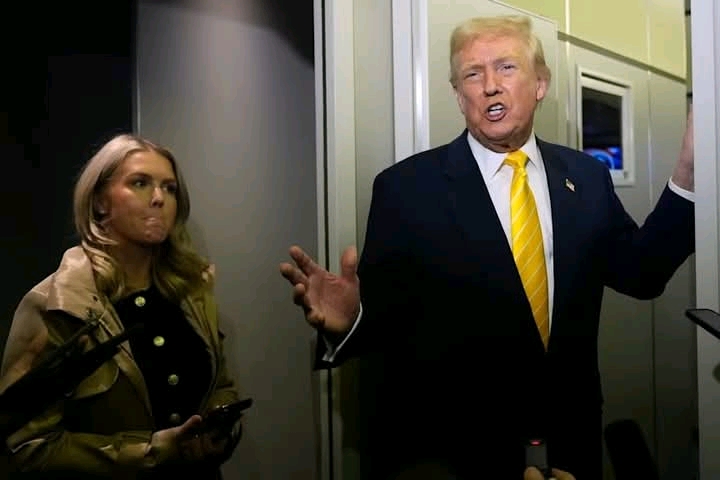
Trump confirms he will sue the BBC next week despite apology
Donald Trump has confirmed he will take legal action against the BBC over how his speech – ahead of the Capitol riot in 2021 – was edited for a documentary. Sabah Choudhry reports
US president, Donald Trump, has said that he still intends to take legal action against the BBC over the editing of a speech on a Panorama documentary.
“We’ll sue them from $1bn to $5bn, probably sometime next week,” he told reporters on board Air Force One.
“We have to do it, they’ve even admitted that they cheated. Not that they couldn’t have not done that. They cheated. They changed the words coming out of my mouth,” he said.
President Trump said he had not spoken to UK prime minister, Keir Starmer, yet but planned to do so over the weekend.
He told reporters that, “the people of the UK are very angry about what happened…because it shows the BBC is fake news”.
The BBC apologised to Trump after splicing two clips together from a speech he delivered for an episode of Panorama – as the broadcaster was accused of another misleading edit.
When asked by GB News’ Bev Turner during a sit-down interview whether he would seek compensation, President Trump told Turner: “I think I have an obligation to do it.”
“I’m not looking to get into lawsuits, but I think I have an obligation to do it.
“This was so egregious if you don’t. You don’t stop it from happening again with other people.”
Earlier this week, Trump’s lawyers threatened to sue the BBC for $1bn in damages unless the corporation issued a retraction, apologised and compensated him.
The backlash led to the resignations of both BBC director-general Tim Davie and BBC News chief executive Deborah Turness from their roles.
Trump’s lawyers had given the BBC a deadline of 10pm on November 14 to respond, which it did.
On Thursday, the broadcaster officially apologised to the US president and added that it was an “error of judgement” and the programme will “not be broadcast again in this form on any BBC platforms”.
Talking to GB News on Friday, President Trump said: “They wrote me a nice letter. ‘We apologise’. But when you say it’s unintentional, I guess if it’s unintentional you don’t apologise.”
The BBC also said it was looking into fresh allegations, published in The Telegraph, that its Newsnight show also selectively edited footage of the same speech in a report broadcast in June 2022.
A spokesperson said that “the BBC sincerely regrets the manner in which the video clip was edited,” but they also added that “we strongly disagree there is a basis for a defamation claim”.
Roger Mosey, former director of news at the BBC, told ITV News Trump was “playing politics”.
“Of course, He has a right to be aggrieved by the way the BBC edited the Panorama programme. If he so aggrieve,d it’s worth £5 billion? I don’t quite believe that,” he said.
“He didn’t even know he had been libelled in this way until a week ago and somehow it has become the most damaging thing in his career.”
What’s next?
Legal experts say the president faces significant obstacles in taking the case to court in the UK or the US.
Trump would need to prove three major components – that the content published was factually false in a defamatory way; that he suffered harm due to the false and defamatory coverage; and that the media organisation knew it was false and acted with “actual malice”.
The deadline to bring the case to UK courts on defamation in the UK is one year, which has already expired because the documentary aired in October 2024.
Subscribe for free to our weekly newsletter for exclusive and original coverage from ITV News. Direct to your inbox every Friday morning.
While Florida law has a two-year limit, bringing a defamation case in America will mean Trump faces a tougher legal standard.
If Trump sues in Florida, he would need to establish that the BBC Panorama documentary was available there. Because the documentary was not shown in the US, it would be hard to show that Americans thought less of the president because of a programme they could not watch.
A pressing question for the UK now is how Starmer will respond to this political quagmire.
The BBC is a public corporation, not a state broadcaster, and is editorially and operationally independent of the government.
If Starmer does not come to the aid of the British state broadcaster, he risks leaving the BBC embroiled in a time-consuming and expensive battle against President Trump, which could cost the British taxpayers. If he does try to dissuade Trump from his lawsuit, he compromises the foundational principle of the BBC’s editorial independence.
“He’s Losing His Mind”: Here’s How Trump Responded To The Supreme Court Ruling Against Him…. FULL STORY 👇 👇 😄
“YOU DON’T BELONG!” — The Moment That SHOOK Congress to Its Core! 💥⚖️ 📺😱 What started as a simple committee hearing turned into a $100 MILLION legal b0mbshell — and left Caroline Leavitt visibly rattled on live TV! Jasmine Crockett didn’t raise her voice — she raised the stakes. With just one sentence and a folder of receipts, she flipped the narrative and made history in 90 seconds flat. 🚨💬 Accusations of fraud. Leaked documents. A courtroom showdown that could rewrite the rules of political warfare. Who belongs in power — and who’s about to lose it all? DETAILS BELOW 👇👇

JUST IN…Ivanka Trump reportedly faces 11 to 19 years. A cooperation deal was on the table. Melania said no. ❗ Prosecutors say Trump’s reaction was immediate — explosive calls, urgent messages, a post that vanished. Trial set for June 9, 2026. If this is only the beginning… what will unfold in open court? 👀 READ FULL STORY 👇 👇
BREAKING….Why has Donald Trump issued Keir Starmer a warning about the Chagos Islands? FULL DETAILS 👇 👇 😁

BREAKING…Momentum builds in Washington as impeachment efforts gain traction. Hearings could follow. Public debate intensifies. Pressure mounts. Removal requires two-thirds in the Senate — But history shows these processes don’t stay small for long. 👀 FULL STORY 👇 👇 😀
JUST IN….Trump, 79, Delivers Deranged Threat to Netflix…FULL STORY 👇 👇 👇

🚨 SH0CKWAVE IN WASHINGTON! 🔥 She stood up quietly… then dropped a political NUCLEAR B0MB. 💣 Rep. Jasmine Crockett just exposed what no one dared to touch — Melania T.r.u.m.p’s secret financial ties to foreign powers… and the reaction? Instant chaos. Within minutes, Donald T.r.u.m.p’s meltdown was caught on camera, screaming, red-faced, in front of stunn3d supporters. Now the internet is on fire. 🔥 The White House is silent. 🏛️ And America is asking: What ELSE has been hidden from us? 👉 Buckle up — this isn’t just another headline. It’s the scandal that could shake the foundation of political power in the U.S. Details in comment 👇👇👇
BREAKING….JASMINE CROCKETT JUST ENDED T.R.U.M.P WITH ONE SENTENCE ON THE CAPITOL STEPS – 34 SECONDS OF DEAD AIR THAT ECHOED LIKE A G.U.N.S.H.O.T No podium. No notes. Jasmine Crockett walks straight to the edge of the marble, grabs a single live mic from a stunned reporter, and looks dead into every camera on Earth. Voice low, lethal, no shout needed: “D0nald T.r.u.m.p isn’t a president. He’s a national emerg.e.ncy wearing a red tie, and every day we let him breathe in that office is another day we betray the country we swore to defend.” Thirty-four seconds of total silence.
JUST IN…Newly Released Epstein Files Reveal Email Exchange Between Melania Trump and Ghislaine Maxwell…READ THE SHOCKING DETAILS👇👇
