
NFL
Kid Rock is the name fans are chanting. ⚡ Right after the NFL paused its decision to bring in Bad Bunny for the halftime show, outrage surged — ticket sales plunged, backlash exploded, and the league was forced to step back. Now both sports and music fans demand one thing: the outlaw energy of Kid Rock, a performer who can set the stage on fire like no other. The question is — will the NFL listen to the roar of the crowd? Details 👇

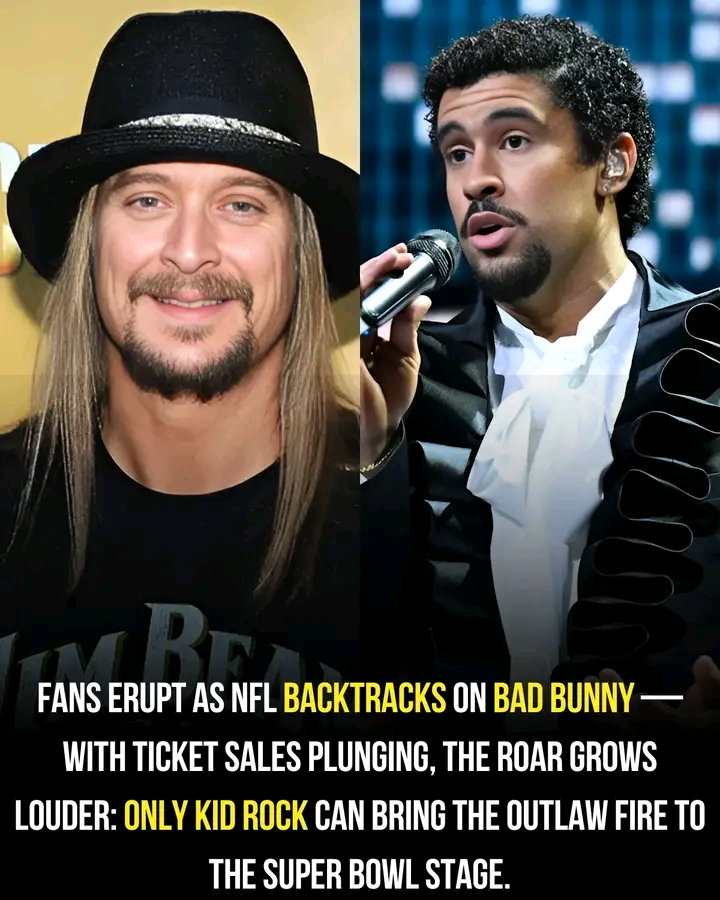
Kid Rock is the name fans are chanting. ⚡ Right after the NFL paused its decision to bring in Bad Bunny for the halftime show, outrage surged — ticket sales plunged, backlash exploded, and the league was forced to step back. Now both sports and music fans demand one thing: the outlaw energy of Kid Rock, a performer who can set the stage on fire like no other. The question is — will the NFL listen to the roar of the crowd?-miaMTP
Kid Rock is the name fans are chanting. ⚡
What began as a routine NFL announcement has spiraled into one of the most explosive debates in recent Super Bowl history. The halftime show, a spectacle watched by hundreds of millions around the globe, was supposed to feature Bad Bunny — a chart-topping megastar with a global fan base. But almost as soon as the decision was made public, the backlash hit like lightning.
Ticket sales slowed. Outrage ignited across social media. Hashtags multiplied by the hour. By the end of the week, the NFL had no choice but to pause its decision and reassess.
And in that silence — in that vacuum of uncertainty — a single name began to rise.
Kid Rock.
Chanted in bars, blasted across fan forums, shouted by voices who felt the soul of football had slipped too far from its roots. For decades, Kid Rock has carried a reputation as the rebel, the outlaw, the unapologetic force who could command a stage with grit and fire. To his supporters, he isn’t just an entertainer. He’s a symbol. A man whose music captures the raw defiance and wild energy they believe belongs on America’s biggest stage.
The demand is no longer quiet. Fans from both sides — sports diehards and music loyalists — are uniting in one call: bring Kid Rock to the Super Bowl.
It’s more than nostalgia. For many, it’s about authenticity. They look at him and see the kind of performer who refuses to bend, refuses to sanitize his edge for corporate approval. They want halftime to feel like a celebration of raw American spirit — not a polished marketing pitch.
The NFL, of course, is caught in the middle. On one side, the promise of global appeal through artists like Bad Bunny, whose influence stretches across continents. On the other, the roar of a domestic fan base that feels unheard, demanding a voice, demanding the outlaw energy of Kid Rock.
The numbers tell part of the story. After the announcement, merchandise sales dipped. Early ticket markets softened. The backlash wasn’t just noise — it carried financial weight. And in a league where every broadcast second is worth millions, that kind of pressure cannot be ignored.
Meanwhile, Kid Rock himself has stayed characteristically cryptic. No official statement, no direct claim — just a few sly posts, a wink here, a lyric there, enough to keep speculation burning. The mystery only adds to the firestorm, leaving fans to fill in the blanks with chants, memes, and digital petitions.
Across the country, the debate has reached living rooms, sports talk shows, and political panels. Is the halftime show about reaching the world — or about honoring the audience that built the NFL into the powerhouse it is? Is it about global markets, or about loyalty to the millions who tune in every Sunday, season after season?
And so, as the Super Bowl looms closer, the league finds itself in uncharted territory. Never before has the halftime show decision carried this much cultural weight. Never before has the crowd spoken this loudly, this relentlessly, in one name.
BREAKING NEWS: Republican Thomas Massie brings down the roof during a House speech on Epstein He fearlessly listed three Epstein associates that should be investigated. The details keeps the Internet buzzing…. FULL STORY 👇 👇 👇
BREAKING….Seven charges. Obstruction. Abuse of war powers. Bribery. Another resolution accusing threats and intimidation. 140 lawmakers just took a decisive procedural step forward. It’s not final impeachment — not yet. But as protests grow outside and pressure mounts inside, Congress is approaching a breaking point… 🚨 SEE MORE 👇👇

He tried to block it. Delay it. Seal it. But the judge rejected every argument for secrecy and ordered the evidence released immediately. Private meetings. Internal communications. January 6 connections. As the ruling echoed through the courtroom, one reaction changed everything — 🚨 FULL STORY 👇 👇
“He’s Losing His Mind”: Here’s How Trump Responded To The Supreme Court Ruling Against Him…. FULL STORY 👇 👇 😄
“YOU DON’T BELONG!” — The Moment That SHOOK Congress to Its Core! 💥⚖️ 📺😱 What started as a simple committee hearing turned into a $100 MILLION legal b0mbshell — and left Caroline Leavitt visibly rattled on live TV! Jasmine Crockett didn’t raise her voice — she raised the stakes. With just one sentence and a folder of receipts, she flipped the narrative and made history in 90 seconds flat. 🚨💬 Accusations of fraud. Leaked documents. A courtroom showdown that could rewrite the rules of political warfare. Who belongs in power — and who’s about to lose it all? DETAILS BELOW 👇👇

JUST IN…Ivanka Trump reportedly faces 11 to 19 years. A cooperation deal was on the table. Melania said no. ❗ Prosecutors say Trump’s reaction was immediate — explosive calls, urgent messages, a post that vanished. Trial set for June 9, 2026. If this is only the beginning… what will unfold in open court? 👀 READ FULL STORY 👇 👇
BREAKING….Why has Donald Trump issued Keir Starmer a warning about the Chagos Islands? FULL DETAILS 👇 👇 😁

BREAKING…Momentum builds in Washington as impeachment efforts gain traction. Hearings could follow. Public debate intensifies. Pressure mounts. Removal requires two-thirds in the Senate — But history shows these processes don’t stay small for long. 👀 FULL STORY 👇 👇 😀
JUST IN….Trump, 79, Delivers Deranged Threat to Netflix…FULL STORY 👇 👇 👇
