
NFL
Late-Night Claims Ignite a Political Firestorm as Rep. Jasmine Crockett Alleges Overnight Threats, Triggers Network Cut-In, and Forces Urgent Questions About Verification, Accountability, and the Power of Viral Narratives

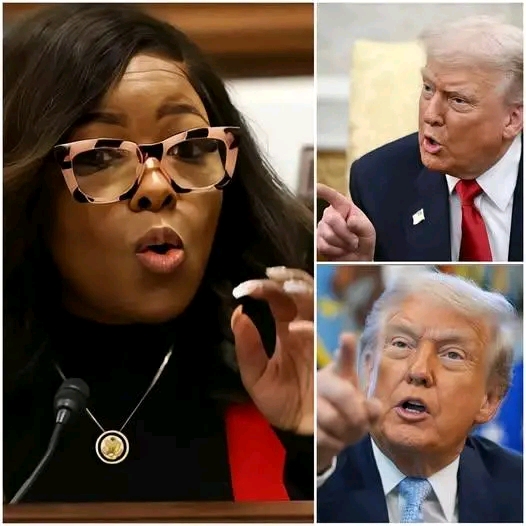
A sudden late-night development sent shockwaves through political and media circles after Jasmine Crockett publicly alleged that she received overnight threats, triggering an unexpected network cut-in and igniting a fast-moving national debate about verification, accountability, and the power of viral political narratives.
The claims, made during an unscheduled media appearance, spread rapidly across social platforms, drawing intense attention before key details could be independently confirmed. Within minutes, the story dominated political discourse, underscoring how modern news cycles can accelerate unverified information into headline status.
A Network Cut-In and Immediate Fallout
According to broadcasters, regular programming was interrupted to carry Crockett’s remarks, a move typically reserved for breaking developments involving public safety or national significance. The urgency of the cut-in amplified the seriousness of the allegations and propelled them into the national spotlight.
Viewers were left with pressing questions: What exactly occurred overnight? Who issued the alleged threats? And what evidence exists to support the claims?
While Crockett emphasized concern for personal safety and the broader climate of political hostility, she also acknowledged that investigations were still in early stages.
Verification in the Age of Instant News
Media analysts say the episode highlights a growing challenge for journalism: balancing the need to report urgent claims from public officials with the responsibility to verify facts before amplification.
In an era where viral clips can shape public opinion within minutes, even preliminary statements can harden into perceived truth. Experts warn that this dynamic places extraordinary pressure on news organizations to clearly distinguish allegations from confirmed findings
Accountability and Institutional Response
Following the broadcast, calls emerged for law enforcement clarification and official briefings. Some lawmakers urged caution, emphasizing due process and the importance of evidence-based conclusions. Others argued that threats against elected officials—real or alleged—must be treated seriously given rising political tensions nationwide.
So far, authorities have not released detailed public findings, reinforcing the need for careful reporting as the situation develops.
The Power—and Risk—of Viral Narratives
The rapid spread of Crockett’s claims illustrates how political narratives can take on a life of their own. Supporters framed the incident as evidence of escalating intimidation in American politics, while critics questioned the speed at which the story was elevated without independent confirmation.
Communication scholars note that once a narrative goes viral, subsequent clarifications often struggle to regain equal attention—regardless of their accuracy.
What Happens Next
As investigations continue, attention is shifting toward official statements, verified timelines, and documented evidence. Media organizations are reassessing how the story was presented, and lawmakers are calling for clearer standards when urgent claims intersect with public safety and political impact.
Whether the allegations are substantiated or not, the episode has already sparked a broader conversation about trust, transparency, and responsibility in the digital news era.
One thing is clear: late-night claims, when amplified instantly, can reshape national discourse—forcing urgent questions not just about what happened, but how information itself now moves through the political bloodstream.
“He’s Losing His Mind”: Here’s How Trump Responded To The Supreme Court Ruling Against Him…. FULL STORY 👇 👇 😄
“YOU DON’T BELONG!” — The Moment That SHOOK Congress to Its Core! 💥⚖️ 📺😱 What started as a simple committee hearing turned into a $100 MILLION legal b0mbshell — and left Caroline Leavitt visibly rattled on live TV! Jasmine Crockett didn’t raise her voice — she raised the stakes. With just one sentence and a folder of receipts, she flipped the narrative and made history in 90 seconds flat. 🚨💬 Accusations of fraud. Leaked documents. A courtroom showdown that could rewrite the rules of political warfare. Who belongs in power — and who’s about to lose it all? DETAILS BELOW 👇👇

JUST IN…Ivanka Trump reportedly faces 11 to 19 years. A cooperation deal was on the table. Melania said no. ❗ Prosecutors say Trump’s reaction was immediate — explosive calls, urgent messages, a post that vanished. Trial set for June 9, 2026. If this is only the beginning… what will unfold in open court? 👀 READ FULL STORY 👇 👇
BREAKING….Why has Donald Trump issued Keir Starmer a warning about the Chagos Islands? FULL DETAILS 👇 👇 😁

BREAKING…Momentum builds in Washington as impeachment efforts gain traction. Hearings could follow. Public debate intensifies. Pressure mounts. Removal requires two-thirds in the Senate — But history shows these processes don’t stay small for long. 👀 FULL STORY 👇 👇 😀
JUST IN….Trump, 79, Delivers Deranged Threat to Netflix…FULL STORY 👇 👇 👇

🚨 SH0CKWAVE IN WASHINGTON! 🔥 She stood up quietly… then dropped a political NUCLEAR B0MB. 💣 Rep. Jasmine Crockett just exposed what no one dared to touch — Melania T.r.u.m.p’s secret financial ties to foreign powers… and the reaction? Instant chaos. Within minutes, Donald T.r.u.m.p’s meltdown was caught on camera, screaming, red-faced, in front of stunn3d supporters. Now the internet is on fire. 🔥 The White House is silent. 🏛️ And America is asking: What ELSE has been hidden from us? 👉 Buckle up — this isn’t just another headline. It’s the scandal that could shake the foundation of political power in the U.S. Details in comment 👇👇👇
BREAKING….JASMINE CROCKETT JUST ENDED T.R.U.M.P WITH ONE SENTENCE ON THE CAPITOL STEPS – 34 SECONDS OF DEAD AIR THAT ECHOED LIKE A G.U.N.S.H.O.T No podium. No notes. Jasmine Crockett walks straight to the edge of the marble, grabs a single live mic from a stunned reporter, and looks dead into every camera on Earth. Voice low, lethal, no shout needed: “D0nald T.r.u.m.p isn’t a president. He’s a national emerg.e.ncy wearing a red tie, and every day we let him breathe in that office is another day we betray the country we swore to defend.” Thirty-four seconds of total silence.
JUST IN…Newly Released Epstein Files Reveal Email Exchange Between Melania Trump and Ghislaine Maxwell…READ THE SHOCKING DETAILS👇👇
