
NFL
Something Unbelievable Is Happening Behind the Super Bowl Stage — Coca-Cola’s CEO Has Just Delivered a Secret Ultimatum That Could End One of America’s Most Powerful Partnerships Overnight, All Because of One Performer the NFL Refuses to Cancel — Insiders Say What’s Coming Next Could Change the Future of the Game, the Brand, and the Country Forever”

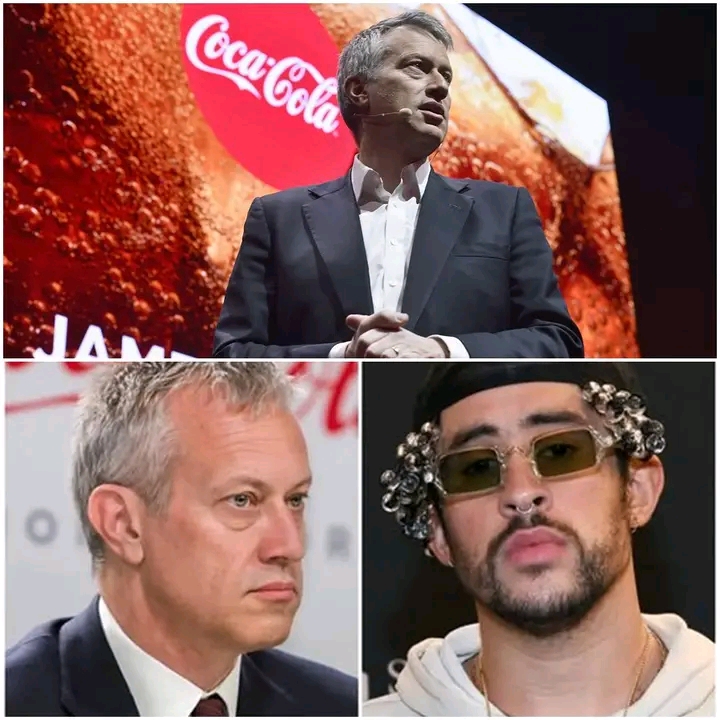
The Super Bowl Showdown: Coca-Cola, the NFL, and the Battle for America’s Cultural Soul
The Super Bowl Showdown: Coca-Cola, the NFL, and the Battle for America’s Cultural Soul
When Coca-Cola’s CEO, James Quincey, declared that his company would withdraw its sponsorship from the Super Bowl if the NFL moved forward with its plan to feature global superstar Bad Bunny in the halftime show, it sent tremors through two of the most powerful institutions in American life. What might have sounded at first like a routine corporate disagreement quickly revealed itself to be something deeper — a collision between business, culture, and identity.
The statement was not just a financial warning; it was a declaration of principle. In one breath, Quincey turned the world’s most watched sporting event into a mirror reflecting the larger tensions of modern America — tradition versus change, heritage versus globalization, and the uneasy balance between entertainment and values.
For the NFL, accustomed to controversy but unaccustomed to open defiance from a sponsor, the announcement landed like a thunderclap. For Coca-Cola, a company that has spent over a century positioning itself as a symbol of American optimism, the decision carried enormous risk. Yet to Quincey and his advisors, the stakes went beyond branding. This was about ownership of the cultural moment itself — who gets to define what America celebrates on its biggest stage.
The Super Bowl is not merely a football game. It is the nation’s annual spectacle of unity — a moment when families, friends, and generations gather not just to watch a sport, but to reaffirm a shared story about who Americans are. For decades, Coca-Cola has been part of that story. Its red-and-white logos, festive commercials, and halftime sponsorships have become part of the pageantry. To many viewers, Coke and football feel almost inseparable.
But when the NFL announced its decision to feature Bad Bunny — a Puerto Rican artist whose fame transcends languages, borders, and genres — that comfortable image fractured. To some within the league, the choice represented progress: an acknowledgment of the global reach of both football and music. To others, including Coca-Cola’s leadership, it felt like a sharp pivot away from the traditional spirit that made the event a cultural cornerstone in the first place.
This wasn’t simply a dispute about a performer. It was a referendum on what the Super Bowl stands for — and who gets to shape its meaning.
The CEO’s Ultimatum
Quincey’s statement was deliberate and direct. As insiders later revealed, it followed weeks of quiet discussions between Coca-Cola and the NFL about the direction of the halftime show. When it became clear that the league intended to move forward with its plans, the CEO chose to speak publicly — not through whispers or anonymous leaks, but through a formal declaration that left little room for interpretation.
“I will end Coca-Cola’s sponsorship of the Super Bowl if this performance proceeds as planned,” he said in a televised press conference that caught even veteran media analysts by surprise.
The timing was crucial. The announcement came just as Super Bowl production schedules were locking into place, forcing the NFL to confront the threat immediately. Losing Coca-Cola would not only strip the event of one of its oldest and most lucrative partnerships — reportedly worth tens of millions annually — but also send a chilling message to other sponsors about the league’s direction.
BREAKING….Seven charges. Obstruction. Abuse of war powers. Bribery. Another resolution accusing threats and intimidation. 140 lawmakers just took a decisive procedural step forward. It’s not final impeachment — not yet. But as protests grow outside and pressure mounts inside, Congress is approaching a breaking point… 🚨 SEE MORE 👇👇

He tried to block it. Delay it. Seal it. But the judge rejected every argument for secrecy and ordered the evidence released immediately. Private meetings. Internal communications. January 6 connections. As the ruling echoed through the courtroom, one reaction changed everything — 🚨 FULL STORY 👇 👇
“He’s Losing His Mind”: Here’s How Trump Responded To The Supreme Court Ruling Against Him…. FULL STORY 👇 👇 😄
“YOU DON’T BELONG!” — The Moment That SHOOK Congress to Its Core! 💥⚖️ 📺😱 What started as a simple committee hearing turned into a $100 MILLION legal b0mbshell — and left Caroline Leavitt visibly rattled on live TV! Jasmine Crockett didn’t raise her voice — she raised the stakes. With just one sentence and a folder of receipts, she flipped the narrative and made history in 90 seconds flat. 🚨💬 Accusations of fraud. Leaked documents. A courtroom showdown that could rewrite the rules of political warfare. Who belongs in power — and who’s about to lose it all? DETAILS BELOW 👇👇

JUST IN…Ivanka Trump reportedly faces 11 to 19 years. A cooperation deal was on the table. Melania said no. ❗ Prosecutors say Trump’s reaction was immediate — explosive calls, urgent messages, a post that vanished. Trial set for June 9, 2026. If this is only the beginning… what will unfold in open court? 👀 READ FULL STORY 👇 👇
BREAKING….Why has Donald Trump issued Keir Starmer a warning about the Chagos Islands? FULL DETAILS 👇 👇 😁

BREAKING…Momentum builds in Washington as impeachment efforts gain traction. Hearings could follow. Public debate intensifies. Pressure mounts. Removal requires two-thirds in the Senate — But history shows these processes don’t stay small for long. 👀 FULL STORY 👇 👇 😀
JUST IN….Trump, 79, Delivers Deranged Threat to Netflix…FULL STORY 👇 👇 👇

🚨 SH0CKWAVE IN WASHINGTON! 🔥 She stood up quietly… then dropped a political NUCLEAR B0MB. 💣 Rep. Jasmine Crockett just exposed what no one dared to touch — Melania T.r.u.m.p’s secret financial ties to foreign powers… and the reaction? Instant chaos. Within minutes, Donald T.r.u.m.p’s meltdown was caught on camera, screaming, red-faced, in front of stunn3d supporters. Now the internet is on fire. 🔥 The White House is silent. 🏛️ And America is asking: What ELSE has been hidden from us? 👉 Buckle up — this isn’t just another headline. It’s the scandal that could shake the foundation of political power in the U.S. Details in comment 👇👇👇
BREAKING….JASMINE CROCKETT JUST ENDED T.R.U.M.P WITH ONE SENTENCE ON THE CAPITOL STEPS – 34 SECONDS OF DEAD AIR THAT ECHOED LIKE A G.U.N.S.H.O.T No podium. No notes. Jasmine Crockett walks straight to the edge of the marble, grabs a single live mic from a stunned reporter, and looks dead into every camera on Earth. Voice low, lethal, no shout needed: “D0nald T.r.u.m.p isn’t a president. He’s a national emerg.e.ncy wearing a red tie, and every day we let him breathe in that office is another day we betray the country we swore to defend.” Thirty-four seconds of total silence.
JUST IN…Newly Released Epstein Files Reveal Email Exchange Between Melania Trump and Ghislaine Maxwell…READ THE SHOCKING DETAILS👇👇
