
NFL
TAYLOR SWIFT BREAKS HER SILENCE: Calls T.R.U.M.P “A VICIOUS OLD BASTARD DRAINING AMERICA’S SOUL” After Born-In-America Act Controversy 👇…..

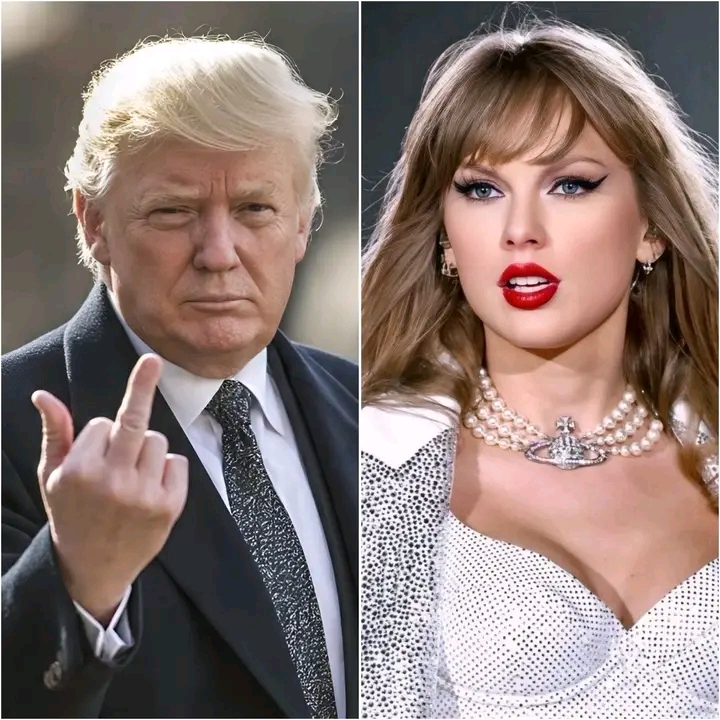
TAYLOR SWIFT BREAKS HER SILENCE: Live TV Remarks Ignite Debate After Born-in-America Act Controversy
In a moment that instantly dominated headlines and social media timelines, Taylor Swift reportedly broke her public silence during a live television appearance, addressing the controversial “Born-in-America Act” and directing sharp criticism at former U.S. president Donald Trump. The remarks—circulating widely in clips and transcripts online—have triggered an intense national conversation, drawing both strong support and fierce backlash.
Editor’s note: As with fast-moving political stories, accounts of live remarks can vary by outlet. Some quotes remain disputed or contextualized differently across broadcasts and platforms. Readers are encouraged to consult primary sources and full recordings where available.
A Televised Moment That Sparked a Firestorm
According to multiple reports and social media excerpts, Swift addressed the Born-in-America Act during a live broadcast, framing her comments as a defense of what she described as America’s foundational values. The language attributed to her was strikingly direct and immediately polarizing, prompting clips to trend across X, TikTok, and Instagram within minutes
The Born-in-America Act has become a lightning rod in contemporary political discourse, cited by critics as restrictive and by supporters as protective of national identity. While details and interpretations differ, the policy’s broader symbolism—citizenship, belonging, and constitutional principles—has fueled debate far beyond legislative text.
Swift’s reported remarks placed her squarely within that debate, aligning her public persona with a moral argument about inclusion and civic responsibility. Supporters argue that high-profile voices can spotlight complex issues; critics counter that celebrity interventions risk oversimplifying policy.
Supporters Applaud, Critics Push Back
The response was swift and divided. Many viewers praised Swift for speaking candidly, framing her stance as courageous and consistent with past advocacy for voting rights and civic engagement. Supporters emphasized the power of cultural figures to elevate conversations that might otherwise remain siloed.
Others were sharply critical, arguing that the rhetoric attributed to Swift crossed a line or politicized entertainment. Some questioned the accuracy of circulating quotes or the context in which they were delivered, urging caution before drawing conclusions.
Political commentators and media analysts noted that the controversy reflects a broader trend: celebrity commentary now spreads faster—and polarizes more deeply—than traditional political messaging.
The Role of Celebrities in Political Discourse
Swift’s influence is difficult to overstate. With a global audience spanning generations, her statements—verified or perceived—can move markets, shape narratives, and mobilize voters. That reach brings heightened scrutiny, especially when political language becomes confrontational.
Historically, Swift has been selective about political engagement, choosing moments that align with her stated values. This latest episode, regardless of interpretation, underscores the evolving expectations placed on artists to weigh in on civic matters—and the risks that accompany doing so in a fragmented media environment.
Media Literacy in the Viral Age
One of the most consequential aspects of the episode may be how it illustrates the speed of modern information flow. Short clips, captions, and paraphrases can outrun full context, amplifying emotion before verification. Media experts recommend viewers seek full segments, confirm sources, and distinguish between direct quotations and commentary.
This advice is particularly relevant when reputations and public trust are at stake. As platforms reward engagement, nuance can be lost—making careful consumption more important than ever.
What Comes Next?
Whether Swift issues clarification or additional context remains to be seen. Past controversies suggest that prolonged silence can allow narratives to harden, while timely clarification can redirect the conversation. For policymakers, the episode adds pressure to articulate positions clearly amid heightened public attention.
For the public, the moment serves as a reminder of how culture and politics intersect—sometimes uncomfortably—in an era where a single broadcast can reshape the news cycle overnight.
Bottom Line
The reported live-TV remarks attributed to Taylor Swift have reignited debate around the Born-in-America Act, celebrity influence, and the responsibilities that come with an enormous platform. As reactions continue to pour in, the episode highlights the need for context, verification, and thoughtful dialogue—especially when viral moments carry real-world consequences.
“He’s Losing His Mind”: Here’s How Trump Responded To The Supreme Court Ruling Against Him…. FULL STORY 👇 👇 😄
“YOU DON’T BELONG!” — The Moment That SHOOK Congress to Its Core! 💥⚖️ 📺😱 What started as a simple committee hearing turned into a $100 MILLION legal b0mbshell — and left Caroline Leavitt visibly rattled on live TV! Jasmine Crockett didn’t raise her voice — she raised the stakes. With just one sentence and a folder of receipts, she flipped the narrative and made history in 90 seconds flat. 🚨💬 Accusations of fraud. Leaked documents. A courtroom showdown that could rewrite the rules of political warfare. Who belongs in power — and who’s about to lose it all? DETAILS BELOW 👇👇

JUST IN…Ivanka Trump reportedly faces 11 to 19 years. A cooperation deal was on the table. Melania said no. ❗ Prosecutors say Trump’s reaction was immediate — explosive calls, urgent messages, a post that vanished. Trial set for June 9, 2026. If this is only the beginning… what will unfold in open court? 👀 READ FULL STORY 👇 👇
BREAKING….Why has Donald Trump issued Keir Starmer a warning about the Chagos Islands? FULL DETAILS 👇 👇 😁

BREAKING…Momentum builds in Washington as impeachment efforts gain traction. Hearings could follow. Public debate intensifies. Pressure mounts. Removal requires two-thirds in the Senate — But history shows these processes don’t stay small for long. 👀 FULL STORY 👇 👇 😀
JUST IN….Trump, 79, Delivers Deranged Threat to Netflix…FULL STORY 👇 👇 👇

🚨 SH0CKWAVE IN WASHINGTON! 🔥 She stood up quietly… then dropped a political NUCLEAR B0MB. 💣 Rep. Jasmine Crockett just exposed what no one dared to touch — Melania T.r.u.m.p’s secret financial ties to foreign powers… and the reaction? Instant chaos. Within minutes, Donald T.r.u.m.p’s meltdown was caught on camera, screaming, red-faced, in front of stunn3d supporters. Now the internet is on fire. 🔥 The White House is silent. 🏛️ And America is asking: What ELSE has been hidden from us? 👉 Buckle up — this isn’t just another headline. It’s the scandal that could shake the foundation of political power in the U.S. Details in comment 👇👇👇
BREAKING….JASMINE CROCKETT JUST ENDED T.R.U.M.P WITH ONE SENTENCE ON THE CAPITOL STEPS – 34 SECONDS OF DEAD AIR THAT ECHOED LIKE A G.U.N.S.H.O.T No podium. No notes. Jasmine Crockett walks straight to the edge of the marble, grabs a single live mic from a stunned reporter, and looks dead into every camera on Earth. Voice low, lethal, no shout needed: “D0nald T.r.u.m.p isn’t a president. He’s a national emerg.e.ncy wearing a red tie, and every day we let him breathe in that office is another day we betray the country we swore to defend.” Thirty-four seconds of total silence.
JUST IN…Newly Released Epstein Files Reveal Email Exchange Between Melania Trump and Ghislaine Maxwell…READ THE SHOCKING DETAILS👇👇
