
NFL
VERY SAD NEWS: 35 minutes ago in Kansas — At the age of 36, Travis Kelce issued an urgent update to his followers, announcing that fiancée, Taylor Swift, is currently… Read more:

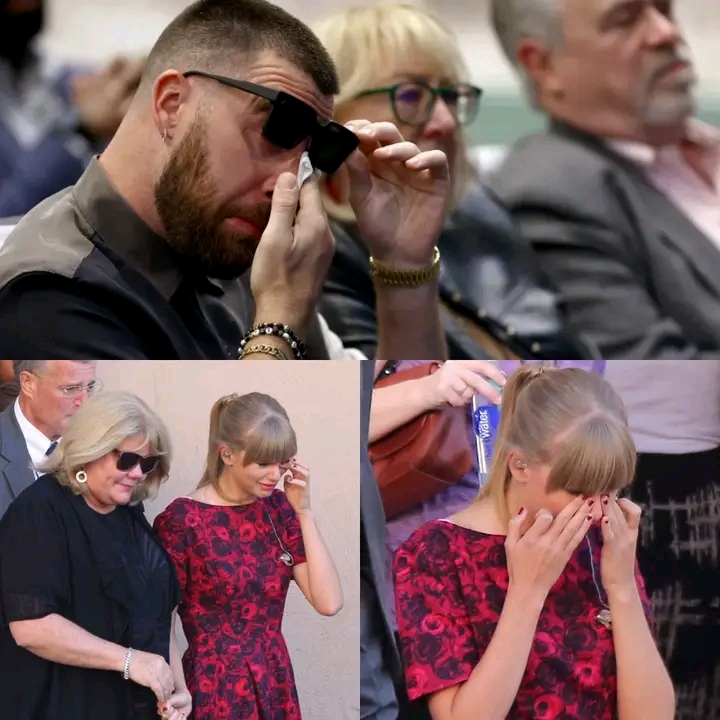
VERY SAD NEWS: 35 minutes ago in Kansas — At the age of 36, Travis Kelce issued an urgent update to his followers, announcing that fiancée, Taylor Swift, is currently…
Very Sad News”: The Dangerous Rise of Celebrity Death Hoaxes and the Taylor Swift–Travis Kelce Rumor
It began, as most modern hoaxes do, with a headline designed to shock:
“VERY SAD NEWS: 35 Minutes Ago in Kansas — At the age of 36, Travis Kelce issued an urgent update about fiancée Taylor Swift.”
Within minutes, it spread like wildfire. The post appeared across YouTube, Facebook, and X (formerly Twitter), often accompanied by blurry thumbnails of Taylor Swift crying, hospital imagery, or black-and-white filters suggesting tragedy. Thousands of users clicked, commented, and shared — all before realizing one crucial fact:
It wasn’t true.
The Anatomy of a Viral Lie
In the digital age, the formula for manufacturing fake news has become disturbingly simple:
Start with a celebrity everyone knows.
Add emotional urgency: “shocking,” “tragic,” “minutes ago.”
Include just enough ambiguity to seem real — a vague “statement,” an unverified “source.”
Wrap it in professional-looking graphics or a video voiceover to create credibility.
The result is digital wildfire. Algorithms reward engagement, not accuracy. And when the headline involves names as globally recognized as Taylor Swift and Travis Kelce, the spread is almost guaranteed.
Within 35 minutes of the original post, screenshots were circulating across fan pages, gossip forums, and “breaking news” channels that have no connection to legitimate journalism.
The Reality Check
Here’s what’s actually true:
Taylor Swift, 35, is currently healthy, touring successfully, and preparing for her upcoming wedding with Kelce.
Travis Kelce, 36, continues to play for the Kansas City Chiefs and recently gave a cheerful post-game interview about his team’s upcoming match.
Neither has issued any “urgent update,” “statement,” or “announcement” resembling the false headline.
Both celebrities’ verified social-media accounts remain active and upbeat. Their teams have issued no press releases indicating any emergency.
In short: the story was fabricated — another in a long series of celebrity hoaxes designed to exploit public emotion and generate clicks.
Why People Fall for It
It’s easy to blame gullibility, but the psychology behind viral misinformation is more complex.
1. Emotional Hijacking.
Fake news thrives on emotion, not reason. Words like “urgent,” “heartbreaking,” or “minutes ago” trigger a fight-or-flight reaction in readers before they have time to think critically.
2. Familiar Faces, False Contexts.
When audiences see trusted figures — in this case, Taylor and Travis — they assume legitimacy. The emotional bond between fans and celebrities makes them more likely to click and share.
3. Algorithmic Amplification.
Social-media platforms are designed to maximize engagement. Outrage and shock outperform calm truth every time. Even a few seconds of hesitation — a click, a comment, a share — is enough to send a rumor skyrocketing across timelines.
A Pattern of Digital Exploitation
This isn’t the first time a celebrity couple has been targeted by fake “death” or “emergency” headlines. Over the past few years, nearly every A-list name — from Tom Holland to Rihanna — has been subject to viral death hoaxes.
But the Swift–Kelce example stands out because of the sheer global reach of their combined fan bases.
Taylor Swift commands over 300 million followers across platforms, while Travis Kelce represents the pinnacle of American sports fame. Together, they are a pop-culture juggernaut — meaning any rumor, no matter how absurd, becomes instantly clickable.
One hoax channel on YouTube reportedly gained half a million views in 24 hours by posting a fabricated “Taylor Swift hospital update.” The video contained no real news — only stock footage and a robotic voiceover repeating the same unverified claim.
The motive isn’t ideology or malice. It’s money. Every click generates ad revenue. Every comment pushes the video higher in search rankings. Fake heartbreak becomes a profitable business.
The Emotional Toll on Fans
For fans — especially younger audiences — these hoaxes don’t just cause confusion; they cause real distress.
“I saw the post and started crying,” one fan wrote on TikTok. “I didn’t even think to check the source. Taylor’s music helped me through everything — I couldn’t believe it.”
Such reactions are precisely what the creators of fake news exploit. They rely on the intimacy between fans and their idols — that parasocial connection — to guarantee engagement.
This phenomenon reveals something deeper about modern fandom: how personal it feels. When misinformation strikes, it doesn’t just distort facts; it manipulates feelings.
Swift and Kelce: The Reality Behind the Rumor
Ironically, the truth about Taylor and Travis right now is the exact opposite of “sad news.”
sports fame. Together, they are a pop-culture juggernaut — meaning any rumor, no matter how absurd, becomes instantly clickable.
One hoax channel on YouTube reportedly gained half a million views in 24 hours by posting a fabricated “Taylor Swift hospital update.” The video contained no real news — only stock footage and a robotic voiceover repeating the same unverified claim.
The motive isn’t ideology or malice. It’s money. Every click generates ad revenue. Every comment pushes the video higher in search rankings. Fake heartbreak becomes a profitable business.
BREAKING….Seven charges. Obstruction. Abuse of war powers. Bribery. Another resolution accusing threats and intimidation. 140 lawmakers just took a decisive procedural step forward. It’s not final impeachment — not yet. But as protests grow outside and pressure mounts inside, Congress is approaching a breaking point… 🚨 SEE MORE 👇👇

He tried to block it. Delay it. Seal it. But the judge rejected every argument for secrecy and ordered the evidence released immediately. Private meetings. Internal communications. January 6 connections. As the ruling echoed through the courtroom, one reaction changed everything — 🚨 FULL STORY 👇 👇
“He’s Losing His Mind”: Here’s How Trump Responded To The Supreme Court Ruling Against Him…. FULL STORY 👇 👇 😄
“YOU DON’T BELONG!” — The Moment That SHOOK Congress to Its Core! 💥⚖️ 📺😱 What started as a simple committee hearing turned into a $100 MILLION legal b0mbshell — and left Caroline Leavitt visibly rattled on live TV! Jasmine Crockett didn’t raise her voice — she raised the stakes. With just one sentence and a folder of receipts, she flipped the narrative and made history in 90 seconds flat. 🚨💬 Accusations of fraud. Leaked documents. A courtroom showdown that could rewrite the rules of political warfare. Who belongs in power — and who’s about to lose it all? DETAILS BELOW 👇👇

JUST IN…Ivanka Trump reportedly faces 11 to 19 years. A cooperation deal was on the table. Melania said no. ❗ Prosecutors say Trump’s reaction was immediate — explosive calls, urgent messages, a post that vanished. Trial set for June 9, 2026. If this is only the beginning… what will unfold in open court? 👀 READ FULL STORY 👇 👇
BREAKING….Why has Donald Trump issued Keir Starmer a warning about the Chagos Islands? FULL DETAILS 👇 👇 😁

BREAKING…Momentum builds in Washington as impeachment efforts gain traction. Hearings could follow. Public debate intensifies. Pressure mounts. Removal requires two-thirds in the Senate — But history shows these processes don’t stay small for long. 👀 FULL STORY 👇 👇 😀
JUST IN….Trump, 79, Delivers Deranged Threat to Netflix…FULL STORY 👇 👇 👇

🚨 SH0CKWAVE IN WASHINGTON! 🔥 She stood up quietly… then dropped a political NUCLEAR B0MB. 💣 Rep. Jasmine Crockett just exposed what no one dared to touch — Melania T.r.u.m.p’s secret financial ties to foreign powers… and the reaction? Instant chaos. Within minutes, Donald T.r.u.m.p’s meltdown was caught on camera, screaming, red-faced, in front of stunn3d supporters. Now the internet is on fire. 🔥 The White House is silent. 🏛️ And America is asking: What ELSE has been hidden from us? 👉 Buckle up — this isn’t just another headline. It’s the scandal that could shake the foundation of political power in the U.S. Details in comment 👇👇👇
BREAKING….JASMINE CROCKETT JUST ENDED T.R.U.M.P WITH ONE SENTENCE ON THE CAPITOL STEPS – 34 SECONDS OF DEAD AIR THAT ECHOED LIKE A G.U.N.S.H.O.T No podium. No notes. Jasmine Crockett walks straight to the edge of the marble, grabs a single live mic from a stunned reporter, and looks dead into every camera on Earth. Voice low, lethal, no shout needed: “D0nald T.r.u.m.p isn’t a president. He’s a national emerg.e.ncy wearing a red tie, and every day we let him breathe in that office is another day we betray the country we swore to defend.” Thirty-four seconds of total silence.
JUST IN…Newly Released Epstein Files Reveal Email Exchange Between Melania Trump and Ghislaine Maxwell…READ THE SHOCKING DETAILS👇👇
