
NFL
WOW: Under huge public pressure, Bad Bunny finally announced that he would not perform at the Super Bowl halftime show. Immediately, Pete Hegseth added fuel to the fire when he affirmed: “It was the right decision, otherwise he would have been deported from the United States immediately.” This statement caused the entire social network to explode with millions of mixed comments. The incident turned Bad Bunny into the center of the biggest controversy of the 2026 Super Bowl season. Fans were confused about what was really going on behind the scenes. And then Bad Bunny’s last statement shocked the entire audience, unable to believe it was true. Bad Bunny’s story quickly became the center of attention…👇👇

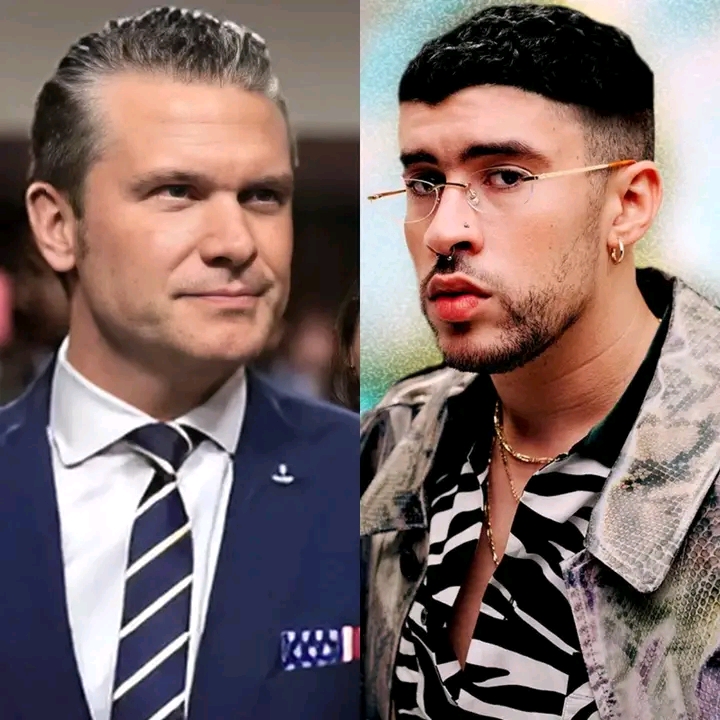
WOW: Under huge public pressure, Bad Bunny finally announced that he would not perform at the Super Bowl halftime show-HOANGKIM
WOW: Bad Bunny Withdraws from Super Bowl Halftime Show — Pete Hegseth’s Explosive Comment Ignites Firestorm
A Stunning Decision Under Pressure
In a shocking twist that left both fans and critics in disbelief, Bad Bunny announced that he will no longer perform at the 2026 Super Bowl Halftime Show. The announcement came late last night, after weeks of mounting pressure, fiery debates, and endless speculation about whether the Puerto Rican superstar’s presence on America’s biggest stage was a bold cultural statement or a controversial misstep.
The Pressure That Changed Everything
From the moment the NFL named Bad Bunny as its halftime performer, reactions were divided. His immense popularity among Latino and global audiences was undeniable, but conservative circles and some American football traditionalists bristled at the choice.
Critics argued that the Super Bowl — considered by many to be a quintessentially American event — should showcase performers who reflect traditional U.S. values. Others, however, hailed the decision as a sign of cultural progress, pointing out that Latinos now make up nearly 20% of the U.S. population and deserve equal representation.
Caught between these two camps, Bad Bunny remained largely silent. But as the backlash grew louder, advertisers voiced concerns, petitions circulated online, and political commentators framed his potential performance as a battle between “cultural inclusion” and “cultural erosion.”
In the end, the pressure proved too much. Bad Bunny’s announcement stunned millions who had been eagerly awaiting his performance
Pete Hegseth Throws Gasoline on the Fire
If the story had ended there, it would already have been headline news. But what came next ensured that the controversy would dominate the national conversation.
Pete Hegseth, conservative commentator and now a high-profile political figure, unleashed a bombshell statement in response to Bad Bunny’s withdrawal:
“It was the right decision, otherwise he would have been deported from the United States immediately.”
The comment sent shockwaves through media outlets and social networks. Some cheered Hegseth’s words as a bold defense of national culture and identity. Others denounced them as xenophobic, inflammatory, and dangerously misleading.
Within hours, hashtags like #BadBunny, #SuperBowlControversy, and #HegsethExplodes were trending worldwide, with millions of comments flooding platforms such as X, Instagram, and TikTok.
A Social Media Earthquake
The internet quickly became a battlefield:
Supporters of Hegseth argued that the Super Bowl should remain a purely American spectacle and claimed the NFL had “learned its lesson.”
Critics blasted the remark as reckless, warning that such rhetoric fuels division and misrepresents immigration laws.
Fans of Bad Bunny were left torn — some devastated that their idol would no longer take the stage, others relieved that he had chosen to step away from what had become a toxic storm.
What Was Really Happening Behind the Scenes?
While the public argued online, whispers emerged from NFL insiders. Some claimed that sponsors had privately pressured the league, worried that the controversy would overshadow their multimillion-dollar ads. Others hinted that the decision was made to prevent security risks, with protests rumored to be planned outside the stadium.
Was Bad Bunny’s withdrawal truly voluntary — or was it the result of intense backroom negotiations? The lack of clarity only deepened the mystery.
Bad Bunny’s Final Words
As speculation swirled, Bad Bunny broke his silence with a final statement that shocked the world. Though brief, his words carried the weight of disappointment, defiance, and something that many interpreted as a veiled warning:
“Sometimes the stage is too small for the truth.”
The cryptic sentence instantly set off a wave of theories. What “truth” was he talking about? Was he hinting at political pressure? At cultural resistance? At the personal cost of being caught in America’s culture wars?
Whatever the meaning, his words only intensified the drama. Fans around the world replayed the statement again and again, dissecting every syllable.
BREAKING NEWS: Republican Thomas Massie brings down the roof during a House speech on Epstein He fearlessly listed three Epstein associates that should be investigated. The details keeps the Internet buzzing…. FULL STORY 👇 👇 👇
BREAKING….Seven charges. Obstruction. Abuse of war powers. Bribery. Another resolution accusing threats and intimidation. 140 lawmakers just took a decisive procedural step forward. It’s not final impeachment — not yet. But as protests grow outside and pressure mounts inside, Congress is approaching a breaking point… 🚨 SEE MORE 👇👇

He tried to block it. Delay it. Seal it. But the judge rejected every argument for secrecy and ordered the evidence released immediately. Private meetings. Internal communications. January 6 connections. As the ruling echoed through the courtroom, one reaction changed everything — 🚨 FULL STORY 👇 👇
“He’s Losing His Mind”: Here’s How Trump Responded To The Supreme Court Ruling Against Him…. FULL STORY 👇 👇 😄
“YOU DON’T BELONG!” — The Moment That SHOOK Congress to Its Core! 💥⚖️ 📺😱 What started as a simple committee hearing turned into a $100 MILLION legal b0mbshell — and left Caroline Leavitt visibly rattled on live TV! Jasmine Crockett didn’t raise her voice — she raised the stakes. With just one sentence and a folder of receipts, she flipped the narrative and made history in 90 seconds flat. 🚨💬 Accusations of fraud. Leaked documents. A courtroom showdown that could rewrite the rules of political warfare. Who belongs in power — and who’s about to lose it all? DETAILS BELOW 👇👇

JUST IN…Ivanka Trump reportedly faces 11 to 19 years. A cooperation deal was on the table. Melania said no. ❗ Prosecutors say Trump’s reaction was immediate — explosive calls, urgent messages, a post that vanished. Trial set for June 9, 2026. If this is only the beginning… what will unfold in open court? 👀 READ FULL STORY 👇 👇
BREAKING….Why has Donald Trump issued Keir Starmer a warning about the Chagos Islands? FULL DETAILS 👇 👇 😁

BREAKING…Momentum builds in Washington as impeachment efforts gain traction. Hearings could follow. Public debate intensifies. Pressure mounts. Removal requires two-thirds in the Senate — But history shows these processes don’t stay small for long. 👀 FULL STORY 👇 👇 😀
JUST IN….Trump, 79, Delivers Deranged Threat to Netflix…FULL STORY 👇 👇 👇
